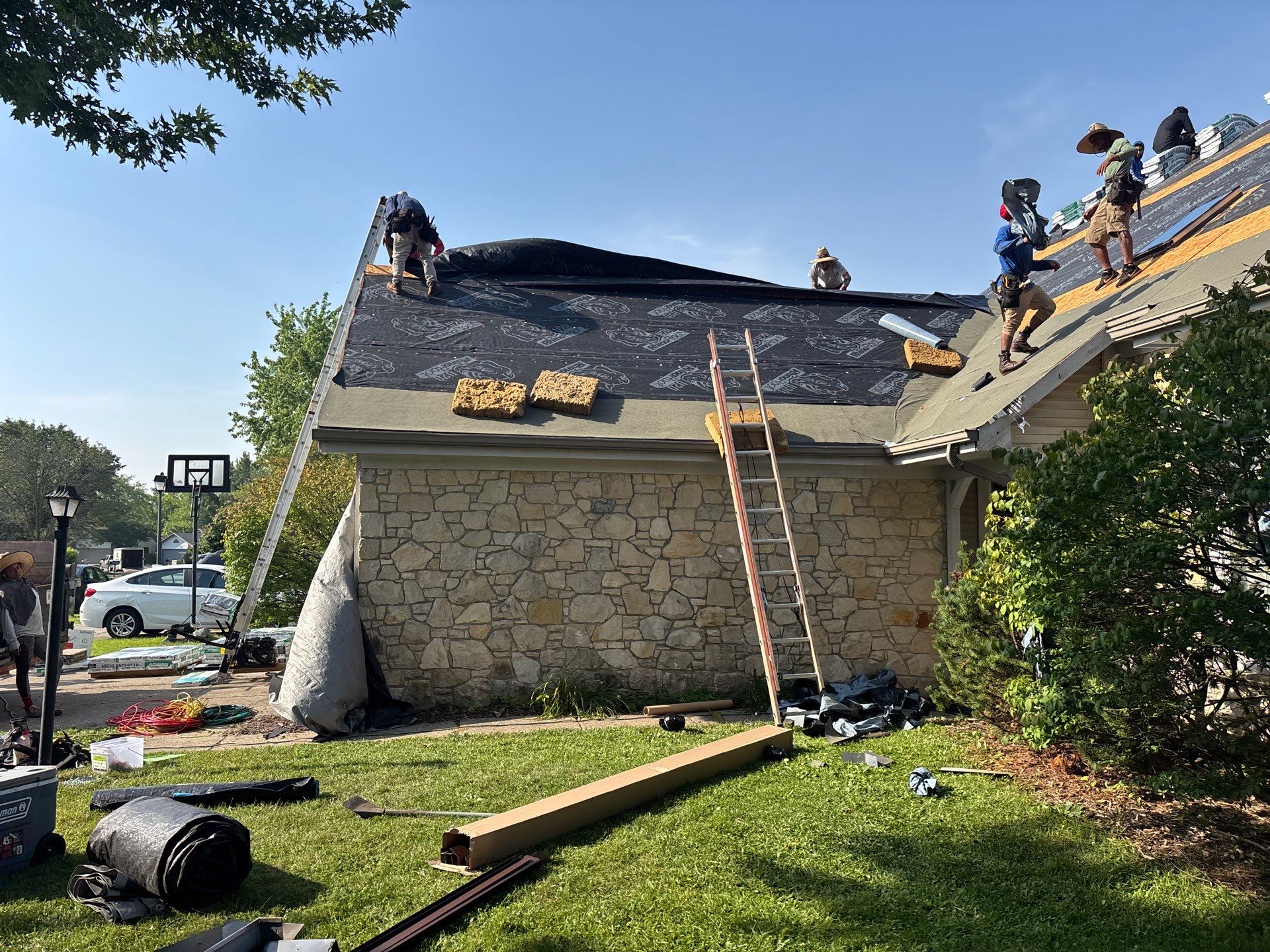
Quick Answer: Finding and Fixing a Roof Leak
To find and fix a roof leak, start by recognizing that water rarely enters where it appears, then trace it to its source. Check the attic for signs of water on the underside of the roof, follow any trails upward toward the entry point, and inspect the roof for damaged shingles, failed flashing, or compromised seals around vents and chimneys. Once you find the true source, repair that specific cause rather than the stain below it. For a Napoleon homeowner, this approach is what produces a lasting fix, since patching the visible spot without finding the real entry point usually leaves the leak to return. When the source is hard to locate or the repair is complex, a professional can find and fix it reliably.
Why the Source Is Often Hard to Find
Roof leaks are tricky because water seldom drips straight down from where it enters. Once water gets past the roofing, it can run along the underside of the decking, follow a rafter, or travel a seam before finally dropping where you see the stain. This means the visible damage can be several feet from the actual entry point. For a Napoleon homeowner, understanding this is the first step, since it explains why patching directly above a stain so often fails. The real source has to be traced, not assumed, which is why finding a leak takes some patience and a willingness to follow the water back to where it truly begins.
Preventing the Next Leak
Once a leak is fixed, preventing the next one comes down to maintenance and attention. Keeping the roof clear of debris, ensuring water drains properly, checking flashing and seals periodically, and addressing minor issues before they worsen all help. Regular inspections can catch developing problems early, when they are cheap to fix. For a Napoleon homeowner, a little ongoing care extends the roof's life and reduces the chance of future leaks, since most leaks develop from gradual wear at the same vulnerable points. Staying ahead of that wear, rather than waiting for the next stain to appear, is the most effective way to keep the roof watertight over the long term.
Checking the Attic
The attic is often the best place to find a leak's source, since it lets you see the underside of the roof directly. With a flashlight, look for water stains, discoloration, damp or compressed insulation, and any visible light coming through the decking. Following these signs uphill points toward the entry. Checking during or just after rain can reveal active dripping that pinpoints the spot. For a Napoleon homeowner, an attic inspection is one of the most useful steps, since it brings you close to the actual source rather than the interior symptom. The trail of water on the decking is a reliable guide back to where the roof is letting water in.
Inspecting the Roof Safely
Inspecting the roof surface can confirm the source, but safety comes first. A roof can be slippery and dangerous, so many homeowners are better off inspecting from a ladder at the edge, using binoculars from the ground, or leaving the rooftop work to a professional. If you do look, check for damaged or missing shingles, lifted or rusted flashing, cracked seals around penetrations, and debris where water might pool. For a Napoleon homeowner, the goal is to spot the likely entry point without taking a fall, so caution is essential. If reaching or safely inspecting the suspected area is not possible, that alone is a good reason to bring in a professional to locate the leak.
Repairing the Source, Not the Stain
The most important principle in leak repair is to fix the actual source, not the visible stain. Sealing or patching the spot where water appears inside does nothing if the entry point is elsewhere, which is why such patches so often fail. A proper repair addresses the real cause, replacing damaged shingles, resealing or replacing failed flashing, or renewing a worn seal at a penetration. For a Napoleon homeowner, this distinction is what separates a lasting fix from a temporary one, since the water will keep finding the same opening until that opening is closed. Repairing the true source is the only way to genuinely stop the leak rather than just hide it for a while.
When a Repair Is Enough
A targeted repair is often enough when the roof is otherwise sound and the leak comes from an isolated, identifiable source, like a single failed flashing or a few damaged shingles. In these cases, fixing the specific problem restores the roof without the cost of replacement. For a Napoleon homeowner, a repair makes sense when the rest of the roof has life left and the leak is localized, which is frequently the situation. The key is that the source is clearly identified and the surrounding roofing is in good condition, so the repair has solid material to bond to. A professional can confirm whether a repair will hold given the roof's overall state.
When to Call a Professional
While some homeowners can locate and fix a simple leak, calling a professional makes sense when the source is hard to find, the roof is steep or unsafe to access, the leak recurs after attempts to fix it, or the damage appears widespread. A professional has the experience to trace elusive leaks and the equipment to work safely. For a Napoleon homeowner, bringing in a professional is the reliable path when the leak resists a straightforward fix, since a misdiagnosed or poorly repaired leak only causes more damage over time. There is no shame in calling for help, and it often saves money by getting the repair right the first time.
Tracing Water to Its Origin
Tracing a leak means following the water backward from where it appears to where it enters. Inside, look for the stain or drip and note its location, then move into the attic if you have access. There, water trails, discoloration, or damp insulation on the underside of the roof can point uphill toward the entry. Since water runs downward, the true source is usually higher up the roof than the interior stain. For a Napoleon homeowner, this upward tracing is the heart of finding a leak, since it follows the water's actual path rather than guessing. Patience here pays off, because correctly identifying the origin is what allows a repair to actually stop the leak.
Where Roof Leaks Usually Start
Most roof leaks start at a handful of vulnerable points rather than in the middle of an intact field of shingles. Common sources include damaged, cracked, or missing shingles, failed flashing around chimneys, walls, and valleys, worn seals around vents and pipes, and clogged or damaged areas where water pools. Skylights and the points where roof planes meet are also frequent culprits. For a Napoleon homeowner, knowing these usual starting points focuses the search, since checking the known weak spots first is far more efficient than examining every inch of the roof. The leak is most likely at one of these penetrations or transitions where the roofing is interrupted.
Common Leak Points to Examine
When searching for the source, examine the points most likely to fail: the flashing around chimneys and walls, the seals around plumbing vents and exhaust pipes, the valleys where roof planes meet, the area around skylights, and any shingles that are cracked, curled, or missing. Nail pops and worn sealant are also common entry points. For a Napoleon homeowner, focusing on these specific areas is the efficient approach, since the vast majority of leaks originate at a penetration or transition rather than in the open field of the roof. Methodically checking each of these likely points greatly improves the odds of finding the true source quickly.
The Bottom Line
Finding and fixing a roof leak comes down to tracing the water to its true source and repairing the actual cause, not the stain. Check the attic, follow the water uphill, examine the common leak points, and fix the real entry, calling a professional when the source is elusive or the roof is unsafe. For a Napoleon homeowner, this approach is what stops a leak for good. Napoleon Roofing helps Napoleon homeowners find and fix roof leaks at the source, with the experience to trace elusive leaks and repair them properly the first time. Call (765) 666-3591 when you need a leak found and fixed right.